
Social Thinking Products


Explore our products!
Flip through our brand-new interactive catalog or browse product listings below.
Flip through our brand-new interactive catalog or browse product listings below.

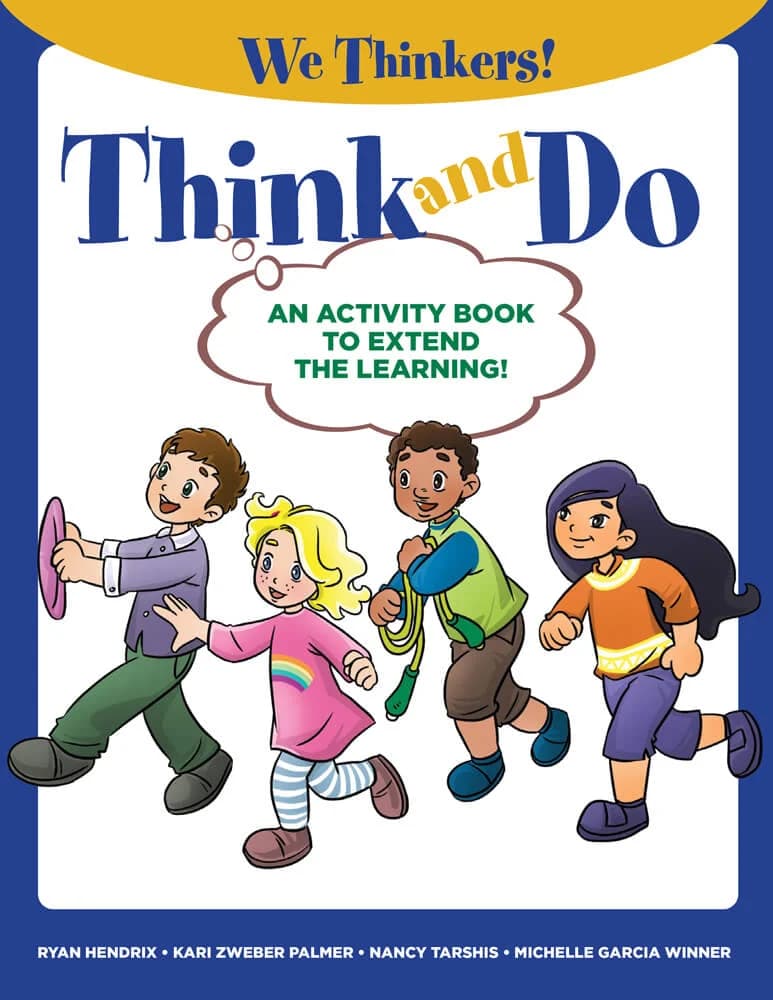
Designed for children ages 4-7, We Thinkers! Think and Do is an engaging activity book that builds on the ideas and images contained in our award-winning We Thinkers! series. Each activity sheet (what we call “thinksheet”) is created to get kids thinking and talking about their own and others' experiences within their social world. The thinksheets include over 90 thoughtfully crafted activities that work as jumping off points for sharing and connecting, and support kids in building social observation, perspective taking, flexible thinking, and problem-solving skills.
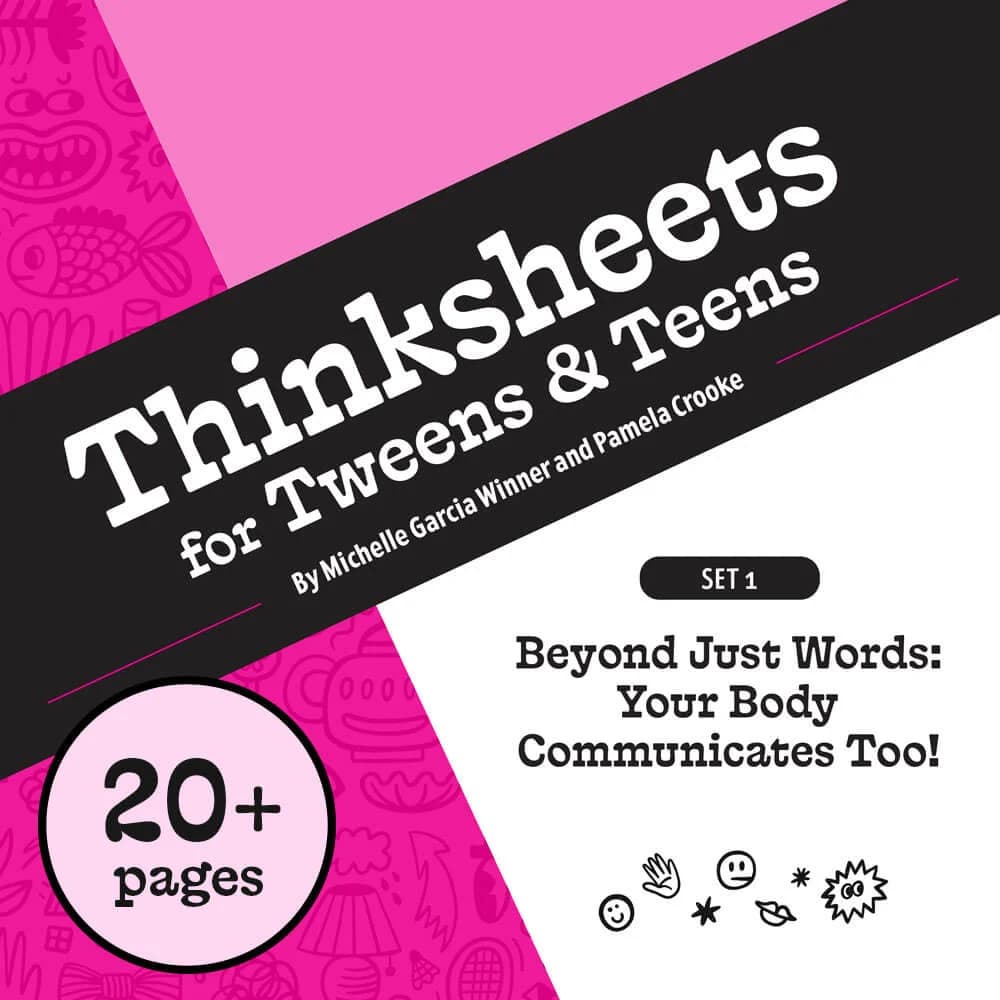
When most teens or tweens think about communication, they think about talking. But communication is so much more than the words we say. Every interaction also includes body language, facial expressions, personal space, gestures, perspective taking, and then responding to others, or sometimes not! This first set of downloadable Thinksheets (thinking-based lesson plans) focuses on helping tweens and teens understand the many ways people communicate beyond words. Through 20 pages of tween/teen-based examples, learners may begin to notice social cues (both words and non-verbals), store information about others, gear up for conversations, and build a foundation to help them understand what the social world is all about. It’s important to work through these together with the child because they are not designed to just copy, hand out, and leave. They are meant to be interactive and support the learner to move towards their goals. You might have seen this download on our official Social Thinking TPT Store. Please make sure to check you don't already own this since this download is nonrefundable.
Download access is limited to the purchaser of this digital download only. Access instructions will be emailed after purchase.
Download a free thinksheet sample. Notify Me when additional sets are released.
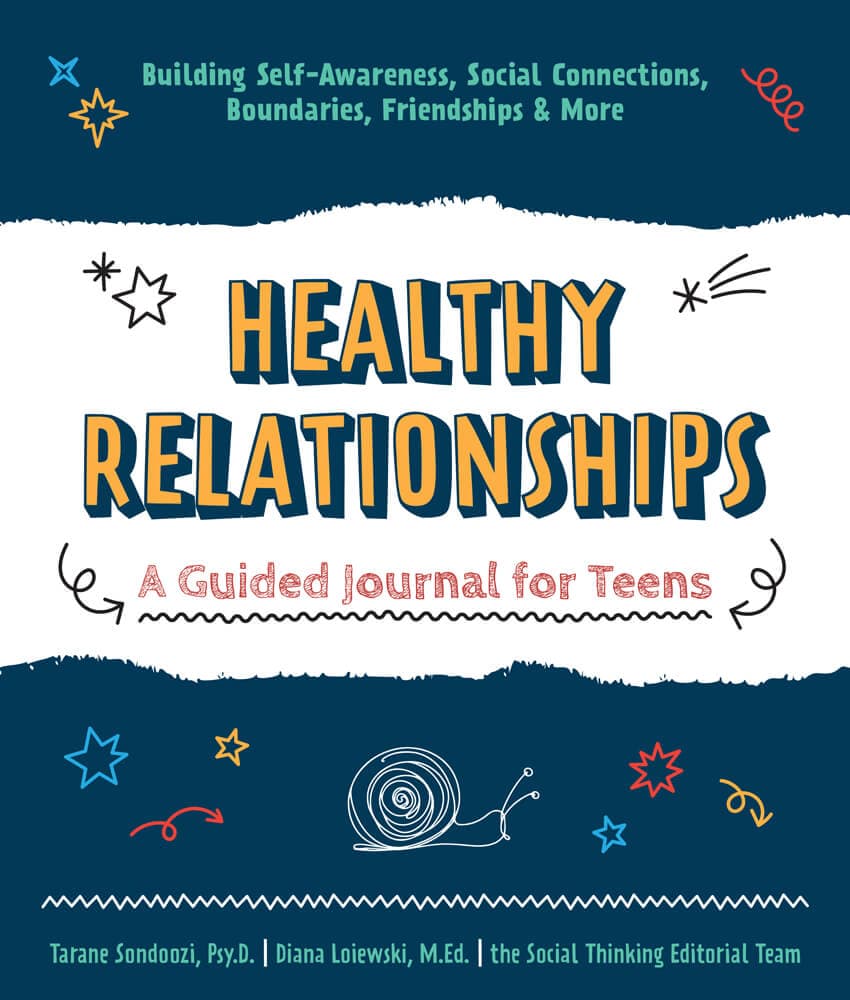
Relationships during the teen years can be amazing, confusing, exciting—and sometimes a little messy. This empowering journal is your tween/teen's personal guide to figuring it all out. Whether it's a friendship, a crush, or someone they've just started hanging out with, teens deserve to feel safe, respected, and heard. Through thoughtful prompts, honest conversations, and room to reflect, this journal helps them explore what makes relationships work—and what doesn't.
Download a free thinksheet sample.
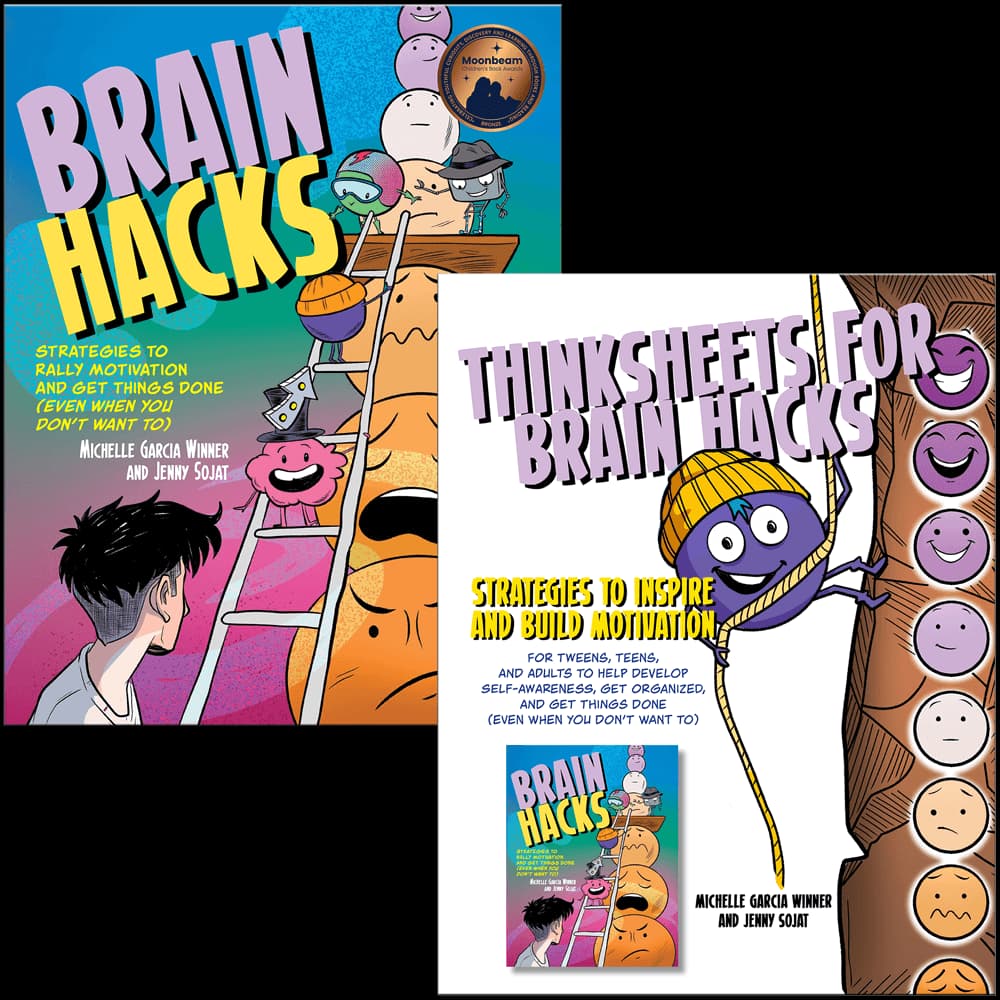
This powerful bundle, which includes the award-winning colorful and dynamic Brain Hacks graphic novel and the companion workbook, Thinksheets for Brain Hacks, shares practical strategies for tweens and teens to build their executive function skills. They will learn how thoughts, feelings, memories, and imagination can team up to build confidence, motivation, and problem-solving skills. This set is packed with useful neurodiversity affirming tools to help students (and their support team) apply the concepts shared in the graphic novel to their daily lives.
Download a free thinksheet sample.

Brain Hacks is a award-winning colorful, high-energy graphic novel where five teens meet online, form friendships and discuss the ups and downs of their different high school experiences. In this process, they imagine a helpful brain-based CREW that consists of 4 different characters; each one offering a different set of practical strategies for the teens to carry out. With science-powered “mind magic,” they learn how thoughts, feelings, memories, and imagination can team up to build confidence, motivation, and problem-solve which all involve executive functioning. Packed with dynamic visuals, time-travel, and brain-boosting tips, this adventure makes managing a tween or teen’s mind feel like the coolest superpower ever.
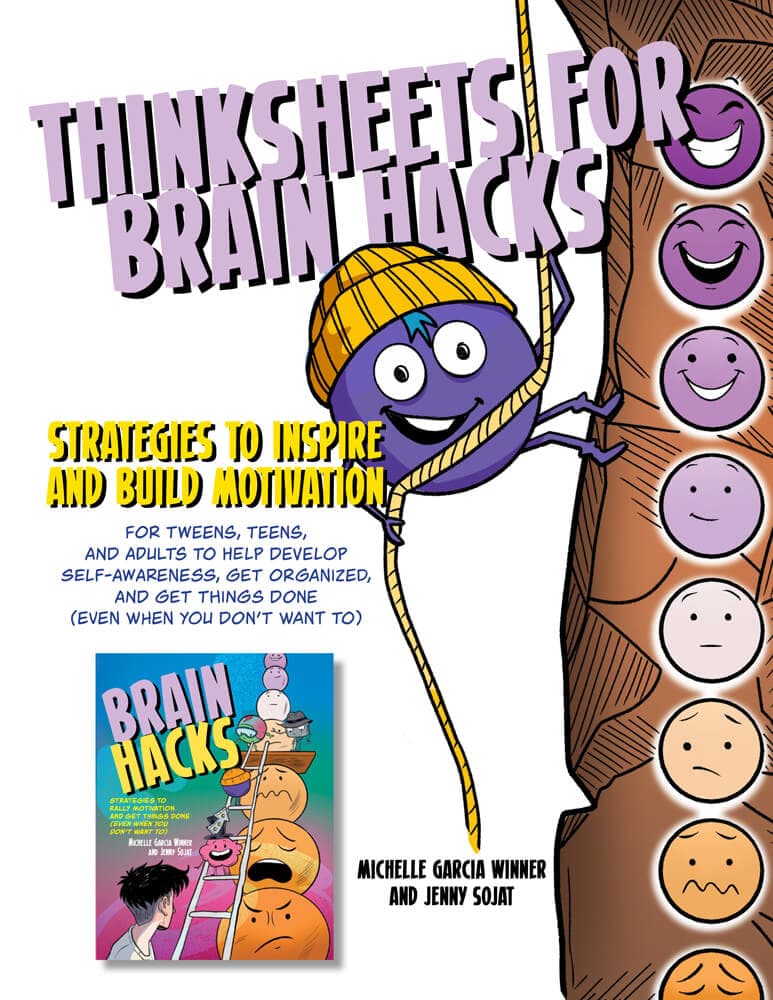
Turn insight into action. Thinksheets for Brain Hacks is the hands-on companion workbook to the Brain Hacks graphic novel—featuring 50+ pages of thinksheets (aka thinking based lesson plans), charts, reflection prompts, and practical tools that bring every chapter to life. Designed for educators and young adult readers alike, this workbook style teaching tool bridges the gap between understanding and doing. Whether you're assisting tweens or teens or they are working through these ideas on their own, the neurodiversity-affirming tools within this book help connect the dots between what they've learned and how they can apply them in their daily lives.
Download a free thinksheet sample.
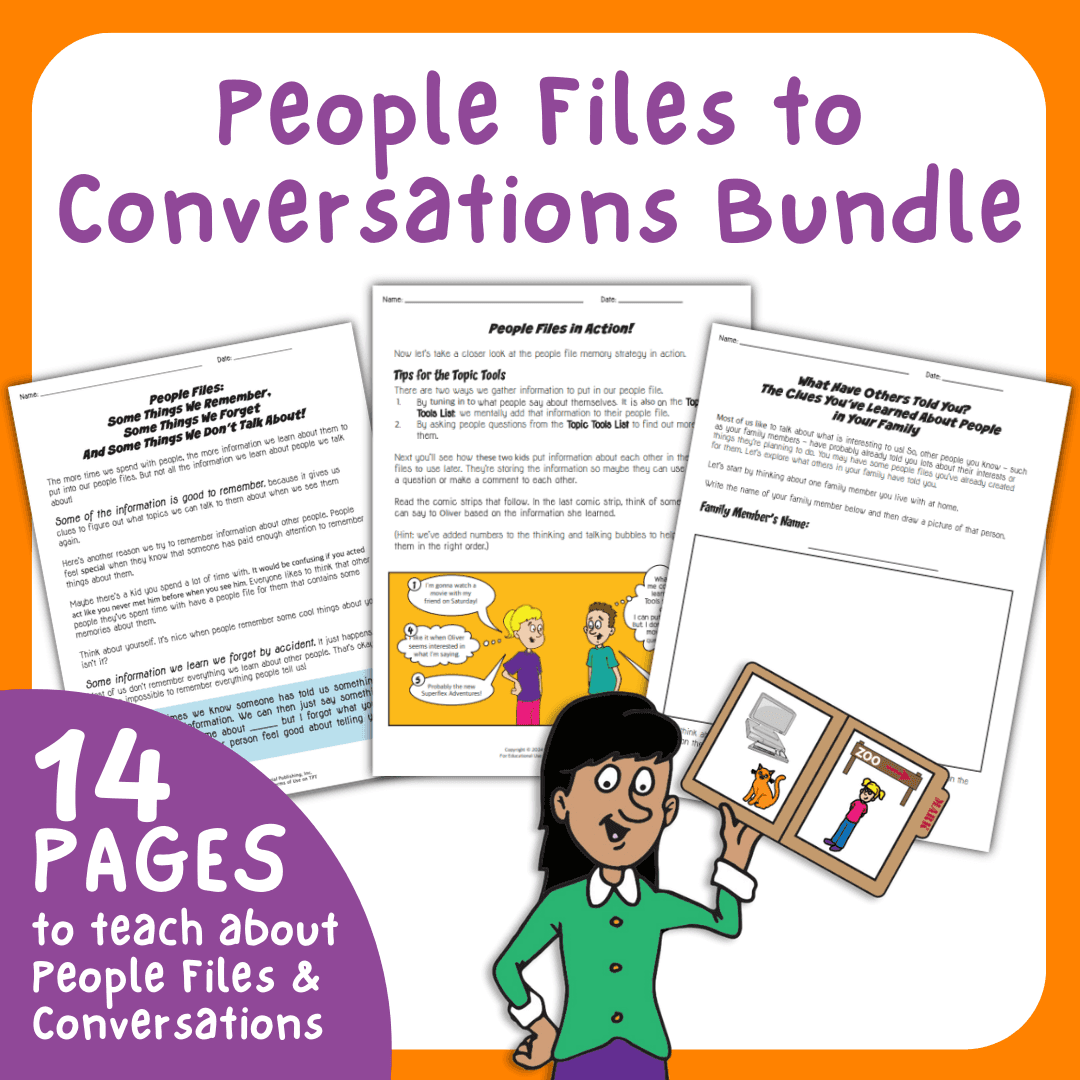
This is a bundle set of 5 Thinksheets (14 pages) in a series of lessons teaching about what we call PEOPLE FILES. People files help us to understand ourselves and others. They are foundational tools for having conversations. You might have seen this download listed in our official Social Thinking TPT Store. Please make sure to check you don't already own this since this download is nonrefundable.
Download access is limited to the purchaser of this digital download only. Access instructions will be emailed after purchase.
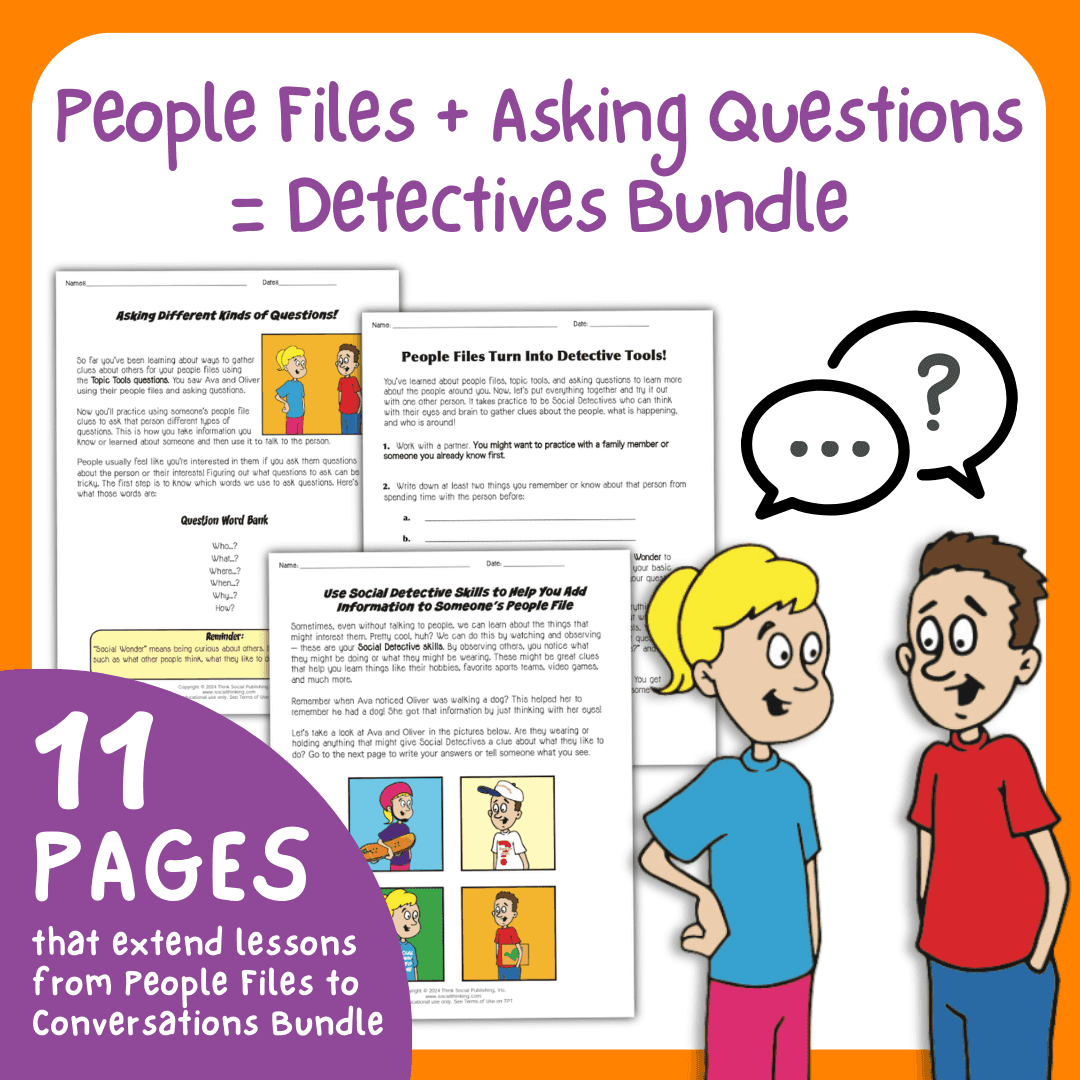
This is a bundle of 11 thinksheets that contain lessons that build and extend on Part 1: People files to Conversations Bundle. In this Part 2, students learn about Question words and how to use their observational skills to make people files that help them to ask others questions and in the process learn about being a Social Detective. In Part 1, students learned about building people files from Ava and Oliver. They learned about Topic Tools. They also learned some simple ways to use that information to interact with others. These strategies are foundational tools for having conversations. You might have seen this download on TPT listed in our official Social Thinking TPT Store. Please make sure to check you don't already own this since this download is nonrefundable.
Download access is limited to the purchaser of this digital download only. Access instructions will be emailed after purchase.
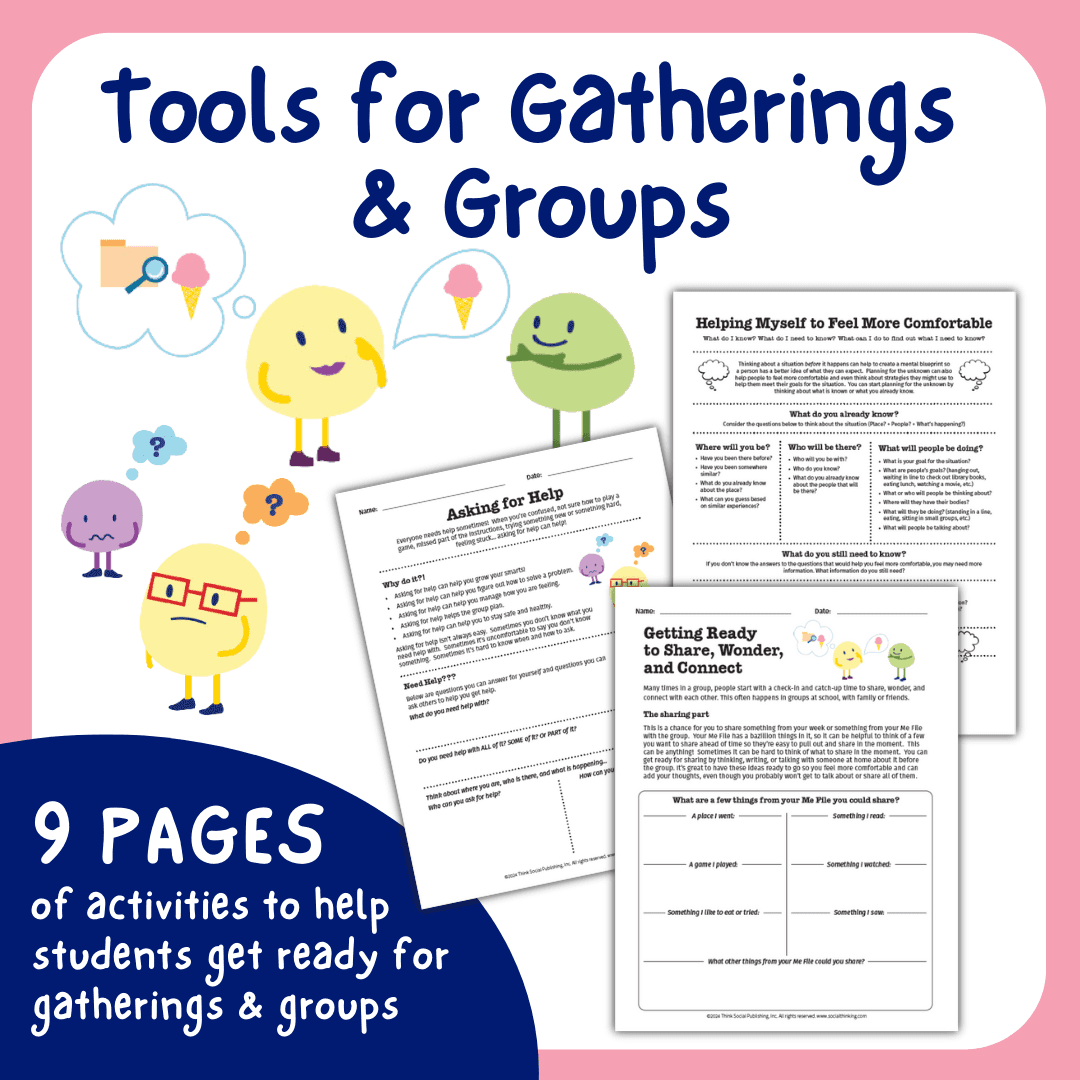
This is a bundle set of 9 pages of thinksheets and lessons for teaching strategies to prepare students for groups and gatherings, something our students encounter on a regular basis. The lessons include: Making a ME file, Asking for help when needed, figuring out strategies for being more comfortable, and connecting to others with wonder questions. Finally, we've included a "game" that is commonly found in group gatherings (2 Truths and a Trick). Use these thinksheets to help your students, clients or children prepare for holiday gatherings, group events, or just sharing space with others. You might have seen this download on our official Social Thinking TPT Store. Please make sure to check you don't already own this since this download is nonrefundable.
Access is limited to one assigned recipient per purchased copy. Access instructions will be emailed after purchase.
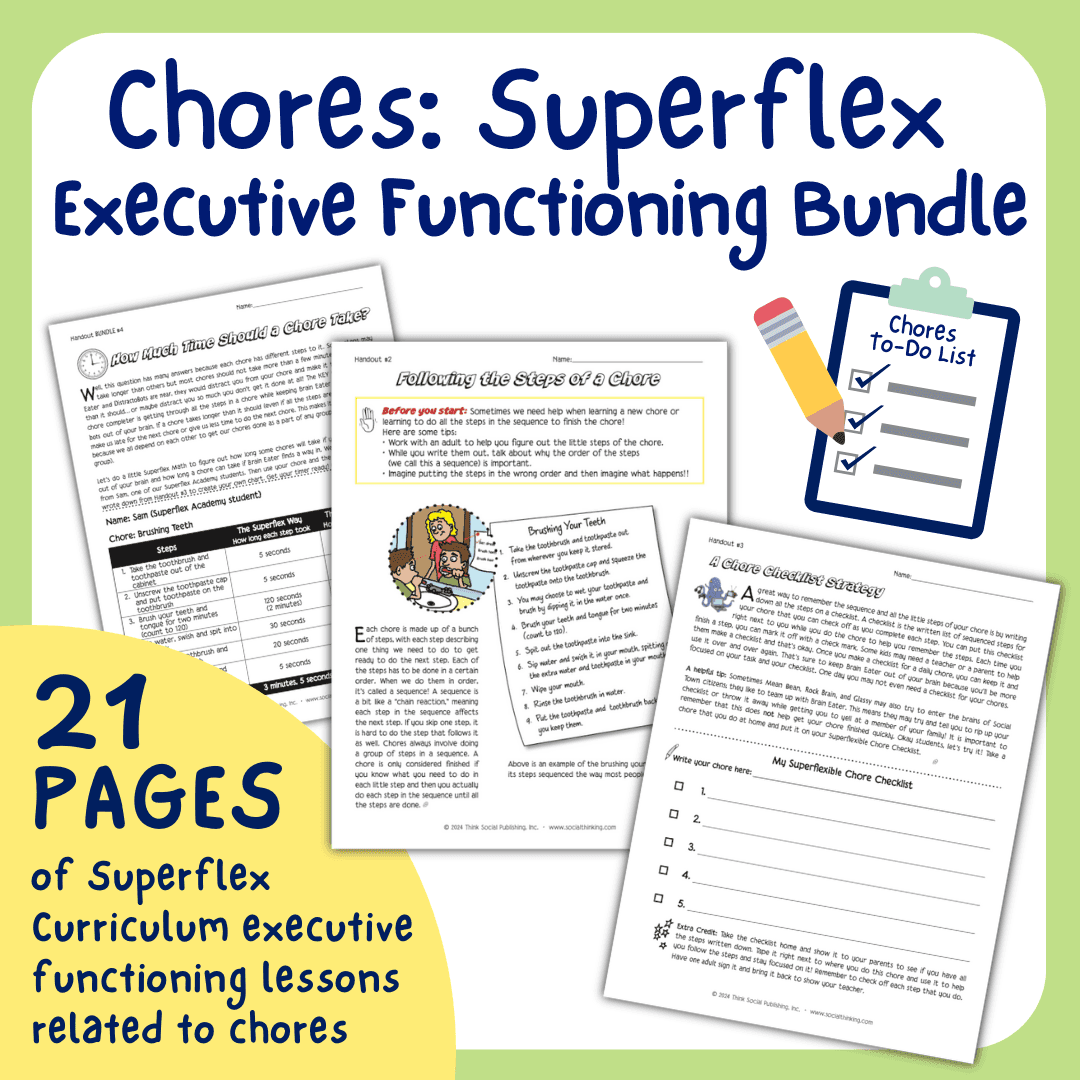
Doing chores requires executive functioning! But building EF is not just about tasks at home. Chores (or things we don't want to do) can require structured teaching. And we know that learning how to do this isn't always motivating for kids, so we've pulled together 21 pages of lessons, visuals, and thinksheets using one of our most popular curriculum series characters, Superflex and the Team of UnthinkaBots as the backdrop! While you'll be able to use most printables without first introducing the Superflex curriculum, most kids will learn better with after participating in lessons from the Superflex Series. You might have seen this download listed in our official Social Thinking TPT Store. Please make sure to check you don't already own this since this download is nonrefundable.
Download access is limited to the purchaser of this digital download only. Access instructions will be emailed after purchase.
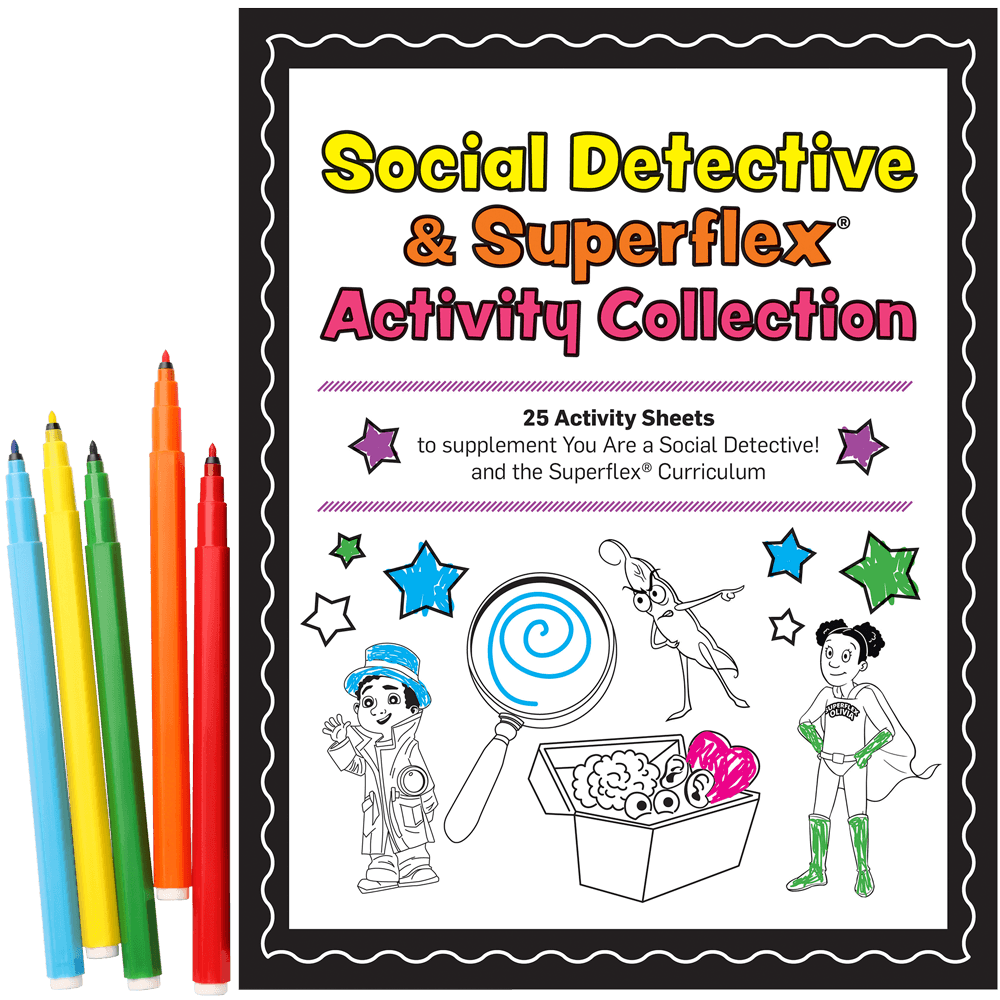
Time to power up and lock in learning with this new set of 25 Social Detective and Superflex coloring/activity sheets! You’ve been asking for simple, engaging tools that kids can do by themselves or in a group to reinforce the core concepts found in the Superflex® Curriculum Series. This coloring/activity set features 7 Social Detective and 18 Superflex pages to extend the learning. Whether you are working in a classroom, a small group, or at home, this set is a way for kids to reflect on their learning, work on their fine motor skills, or build their curiosity and imagination about the Thinkables and UnthinkaBot characters! If you’re new to the Superflex Metaverse, that’s okay. The coloring/activity pages are still fun! You might have seen this download on our official Social Thinking TPT Store. Please make sure to check you don't already own this since this download is nonrefundable.
Download access is limited to the purchaser of this digital download only. Access instructions will be emailed after purchase.
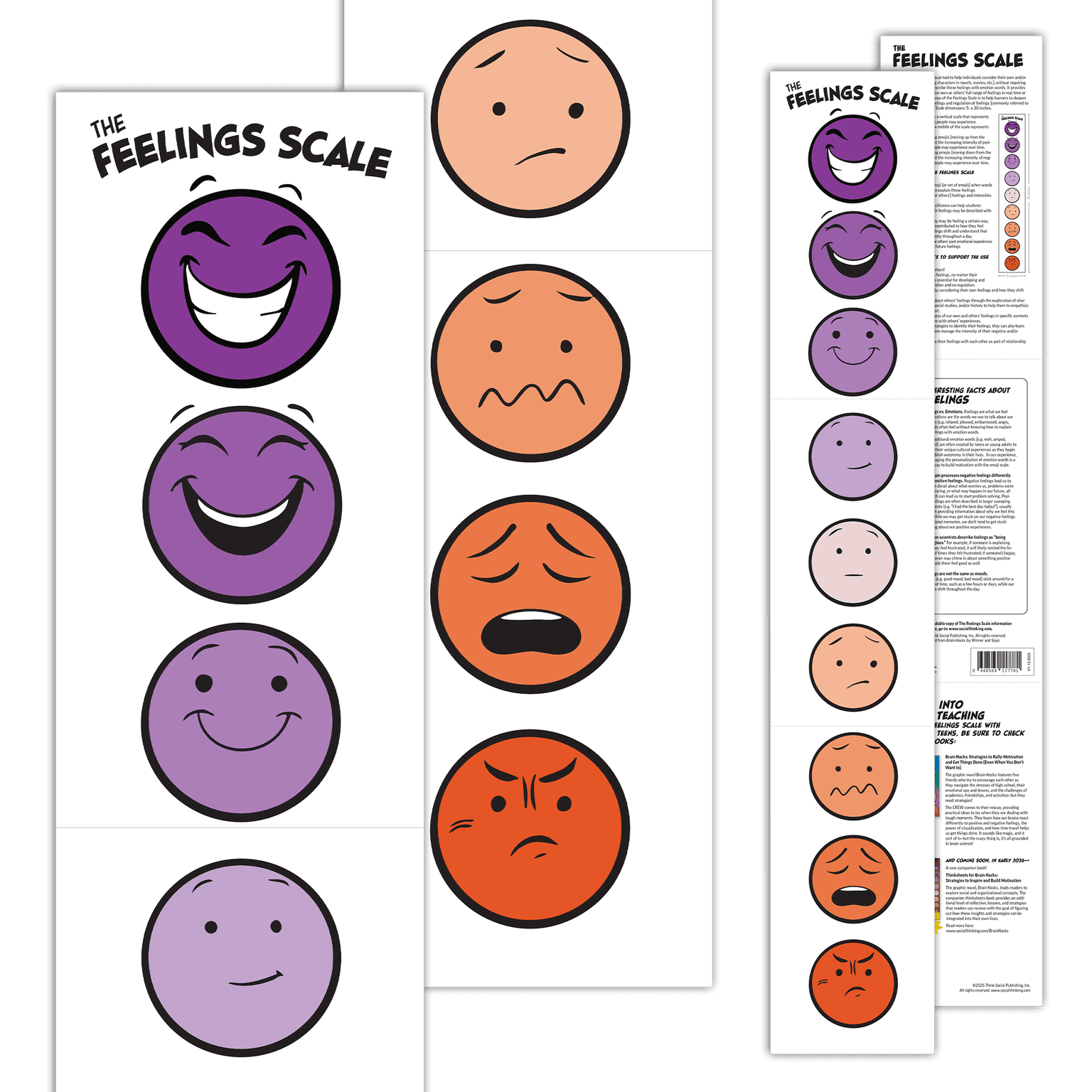
The Feelings Scale is a simple visual tool that uses nine emojis to help individuals explore a full range and intensity of their feelings without needing specific emotion words. The back of the scale and an accompanying hidden webpage provide tips, facts, and teaching concepts to support emotional understanding and regulation.
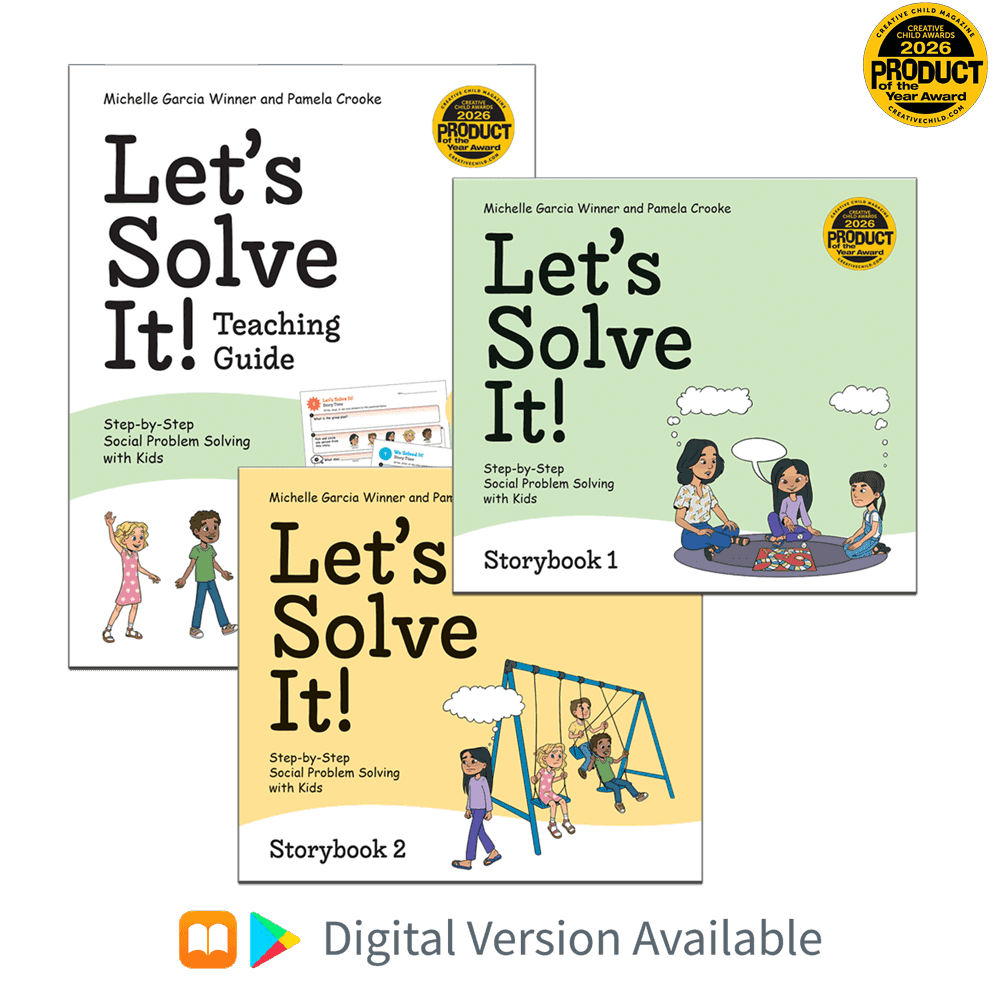
The award-winning Let’s Solve It! Step-by-Step Social Problem Solving with Kids, 3-book Teaching Set, gives educators, therapists, parents, and caregivers a structured, visual, step-by-step way to teach kids about social problem solving through illustrated stories and problem-solving templates. Two storybooks help kids explore situations through multiple perspectives, while the companion teaching templates enhance understanding of basic concepts, encourage engagement, and build critical thinking skills.
Join Michelle and Pam as they celebrate the release of this new 3-book teaching set for 7-9+ year olds! Register for Free.
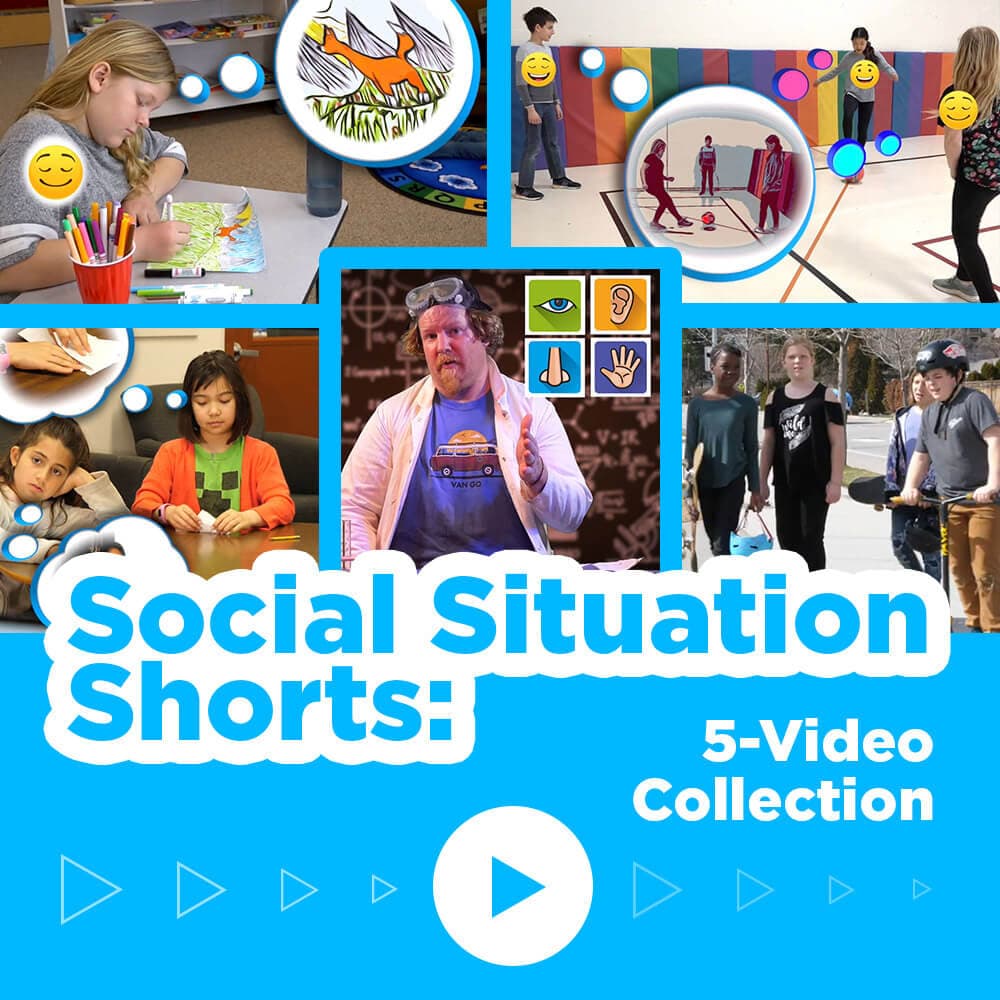
Get ready to engage social learning with Social Situation Shorts, a set of five video vignettes, featuring real kids in real-world social situations using their social thinking and social skills. These teaching videos are perfect for fostering discussions and engaging young students or clients with relatable social situations. Each video comes with two lesson plans to extend the learning, and some shorts feature a visit from Science Guy Brad for a little extra fun. Have fun exploring social concepts and skills for kids between the ages of 5-9+.
Video access is limited to the purchaser of the Social Situation Shorts. This video is not eligible for CE credit.
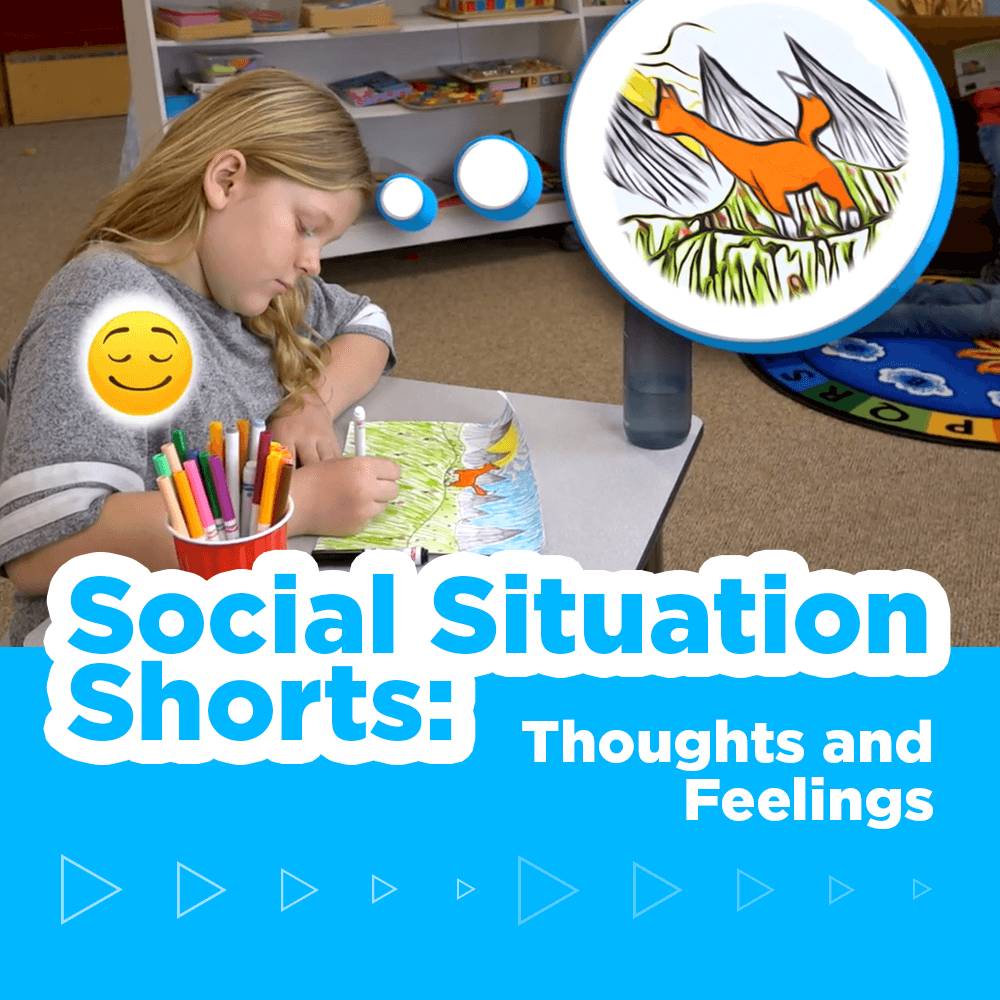
In this video short, real-life students learn about their own Thoughts and Feelings in the classroom, on the playground, and at home. Using thought bubbles and emojis, kids learn how their thinking and feelings connect. This video short has built-in moments to pause the action and discuss or explore the concept. Two thinking-based lesson plans (thinksheets) are included to help students reflect, encourage discussions, and extend the learning. The first is designed for younger students who need more support thinking to understand the concepts. The second is for older students or when teaching more in depth about the concepts introduced in the videos.
Video access is limited to one assigned recipient per purchased copy. This video is not eligible for CE credit.
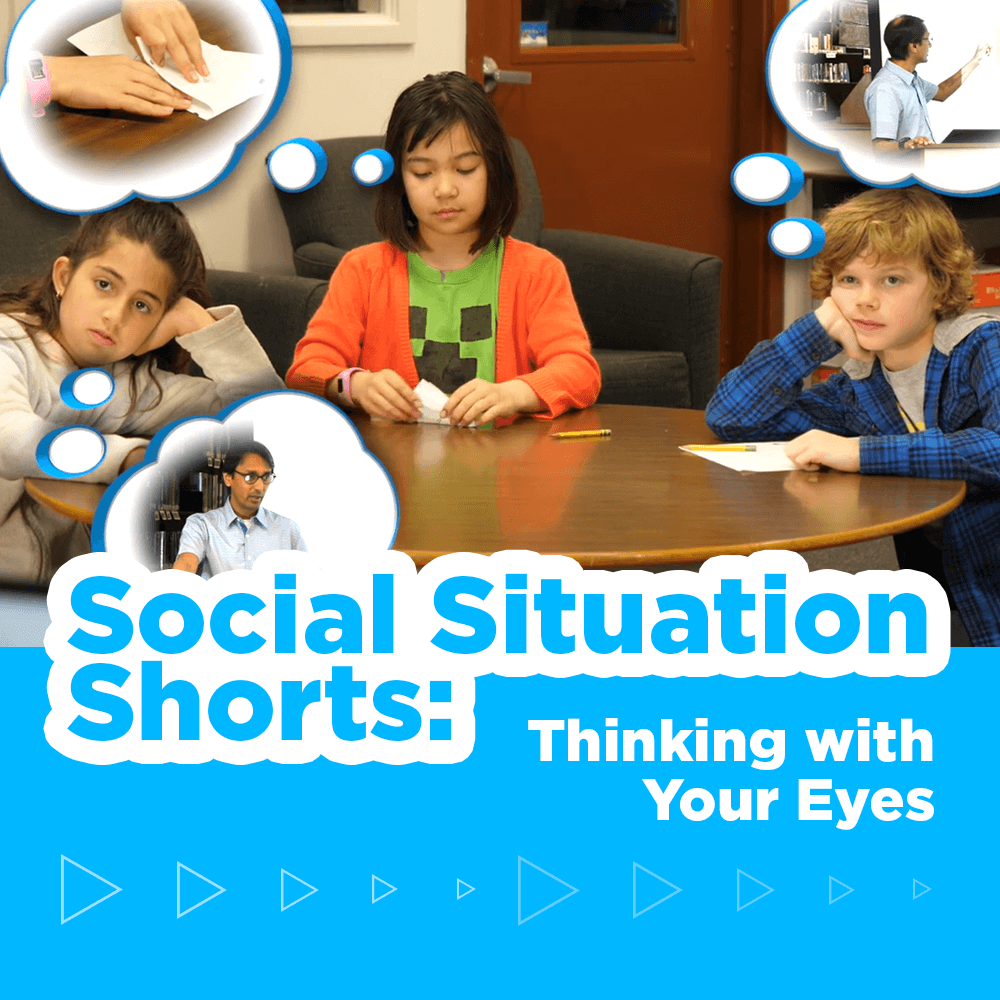
Our brains help us to think about what we see with our eyes. When our eyes and brain team up together they gather clues about where we are, who is around, and what is happening. Thinking with our eyes isn’t about eye contact. It is about using our eyes to gather clues, figure out what’s happening, and show interest. In this video short, you’ll meet Science Guy Brad, a fun-loving social scientist, who pops in to give informative, engaging, and sometimes wacky tutorials. Two thinking-based lesson plans (thinksheets) are included to help students reflect, encourage discussions, and extend the learning. The first is designed for younger students who need more support thinking to understand the concepts. The second is for older students or when teaching more in depth about the concepts introduced in the videos.
Video access is limited to the purchaser of the Social Situation Shorts. This video is not eligible for CE credit.
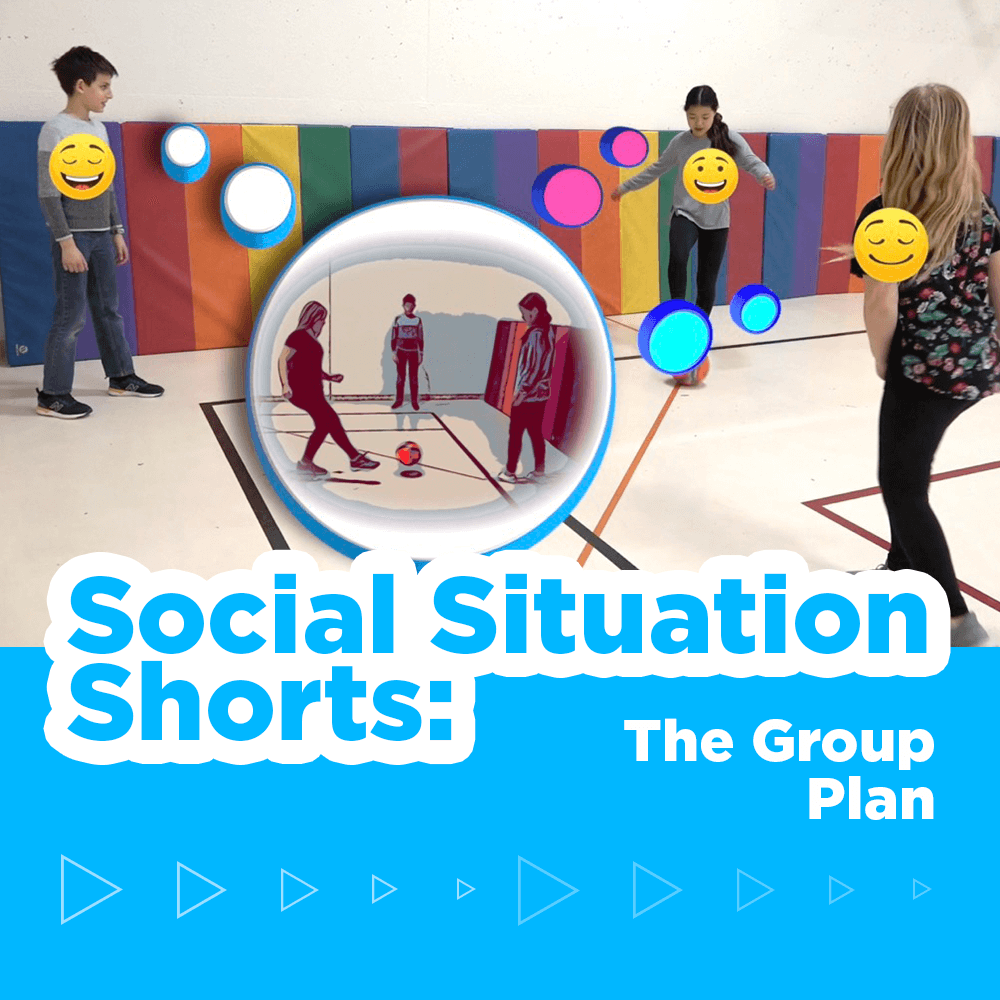
In this video short, real kids learn about the idea of a Group Plan. Whenever we share space with a group of people, we’re part of a group and groups usually have a plan. A group plan is when there’s a shared goal where everyone is thinking about the same thing or doing things that connect to the group goal. Sometimes we call the group plan the WE-plan. When we are doing our own thing, we call it the ME-plan. Two thinking-based lesson plans (thinksheets) are included to help students reflect, encourage discussions, and extend the learning. The first is designed for younger students who need more support thinking to understand the concepts. The second is for older students or when teaching more in depth about the concepts introduced in the videos.
Video access is limited to the purchaser of the Social Situation Shorts. This video is not eligible for CE credit.
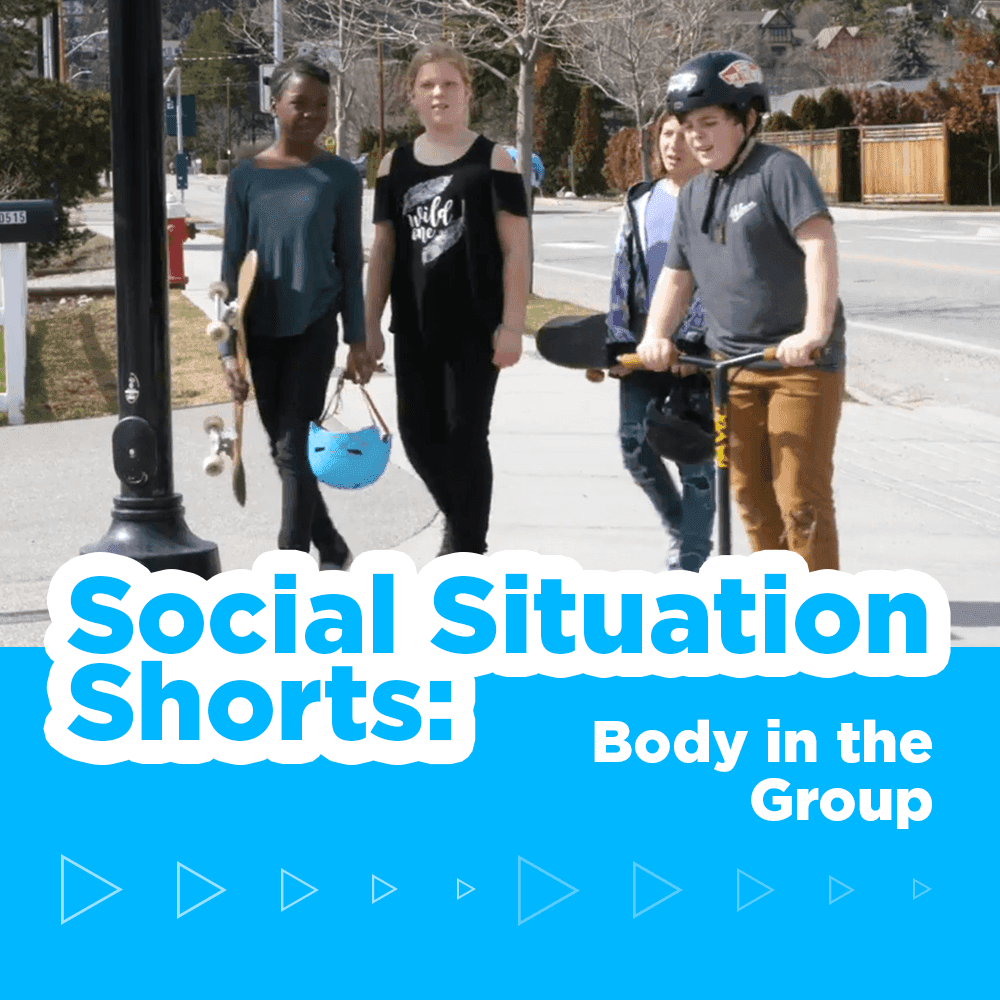
In this video short, real kids learn that groups can come in all sizes and about the concept of Body in the Group. Science Guy Brad, a fun-loving social scientist, makes an appearance and teaches viewers they can figure out when people are in groups by what they do with their bodies. Kids also learn that moving one’s body in or out of the group changes with the situation (where you are, what is happening, and who you are with). Visual supports (e.g., thought bubbles and emojis) appear throughout the scenarios to make abstract ideas more concrete. Two thinking-based lesson plans (thinksheets) are included to help students reflect, encourage discussions, and extend the learning. The first is designed for younger students who need more support thinking to understand the concepts. The second is for older students or when teaching more in depth about the concepts introduced in the videos.
Video access is limited to the purchaser of the Social Situation Shorts. This video is not eligible for CE credit.
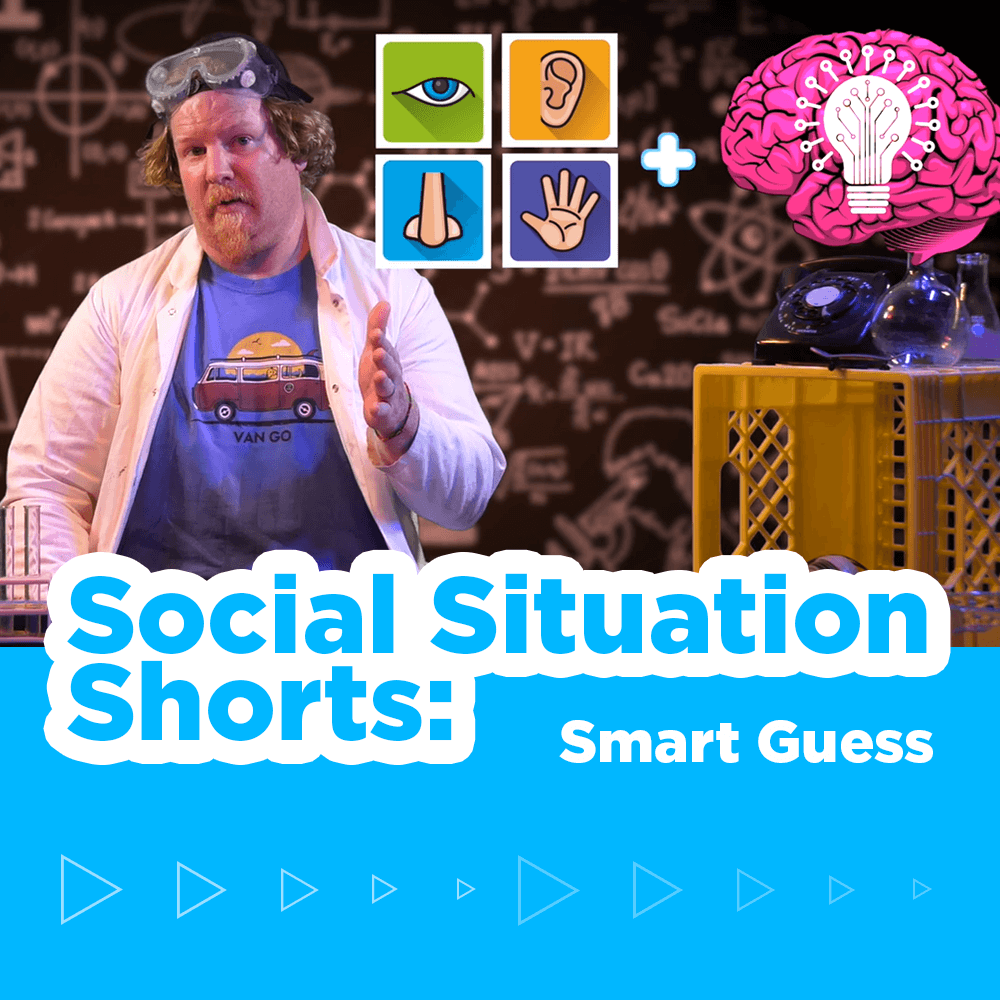
There are all sorts of guesse –silly, witty, educated, completely random, wild, wacky, and smart. Science Guy Brad, our lovable and silly social scientist, shares the secret formula for making a smart guess. Every formula has parts or ingredients. To make a smart guess, you add what you see and hear, what you smell and touch, plus what your brain already knows or remembers, plus what you notice about how you and others are thinking and feeling. Smart guesses happen when we use the formula! Two thinking-based lesson plans (thinksheets) are included to help students reflect, encourage discussions, and extend the learning. The first is designed for younger students who need more support thinking to understand the concepts. The second is for older students or when teaching more in depth about the concepts introduced in the videos.
Video access is limited to the purchaser of the Social Situation Shorts. This video is not eligible for CE credit.
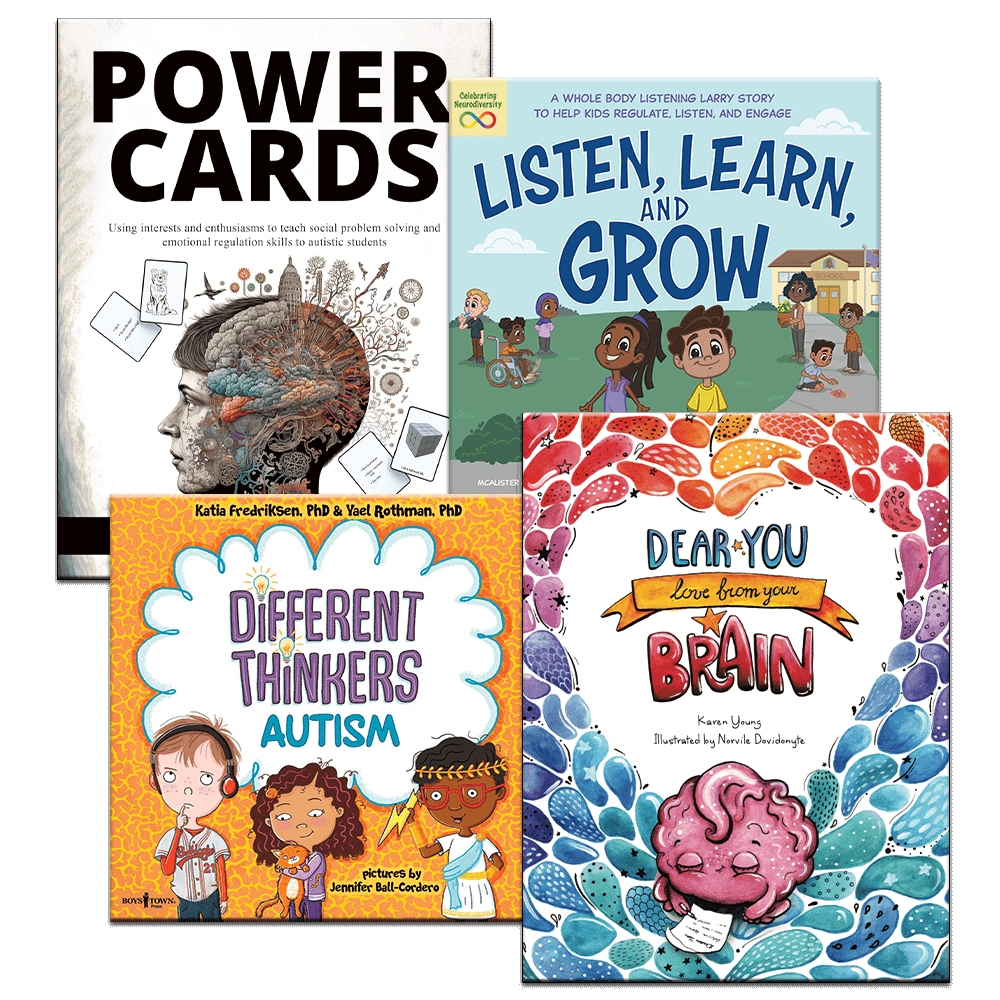
This empowering collection of books and tools supports and celebrates neurodivergent learners by acknowledging and embracing their unique strengths, explaining how all of our brains work in different and valuable ways, and providing practical teaching strategies and tools that foster self-awareness, social understanding, and personal growth in ways that align with each individual's goals and experiences. Perfect for kids, caregivers, educators, and clinicians, this inspiring assortment of products promotes greater understanding and support for neurodivergent learners across home, school, clinical, and community settings.